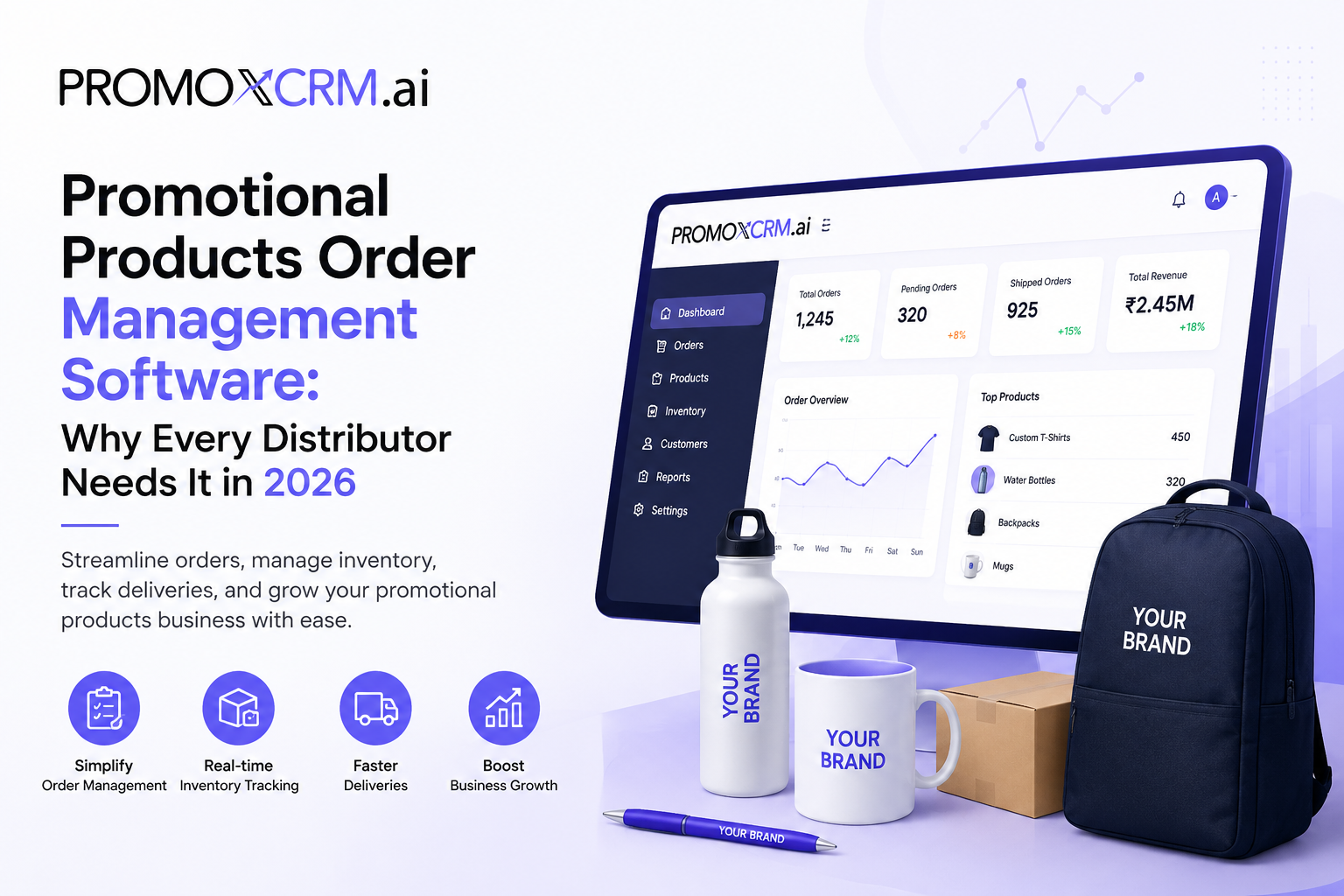
The promotional products industry has evolved dramatically over the past few years. Customers no longer expect simple order processing—they demand fast quotes, real-time order tracking, seamless communication, accurate artwork approvals, and on-time delivery. Managing all of these tasks manually using spreadsheets, emails, and disconnected software isn’t just inefficient anymore; it’s a major obstacle to business growth.
This is exactly where Promotional Products Order Management Software becomes a game changer. Instead of juggling multiple systems, distributors can centralize every stage of the order lifecycle—from the initial inquiry to production, invoicing, shipping, and customer follow-ups. Businesses that automate these processes save valuable time, reduce costly errors, and create a smoother buying experience for their clients.
As the promotional products market becomes increasingly competitive in 2026, investing in a purpose-built platform is no longer optional. It’s becoming a necessity for companies that want to scale while maintaining exceptional customer service.
What Is Promotional Products Order Management Software?
Promotional Products Order Management Software is an all-in-one business management solution specifically designed for promotional product distributors, decorators, print shops, and branded merchandise companies.
Unlike generic CRM or ERP systems, these platforms understand the unique workflow involved in promotional product sales. They help businesses manage:
- Customer inquiries
- Sales opportunities
- Product sourcing
- Supplier communication
- Artwork approvals
- Purchase orders
- Production scheduling
- Shipping updates
- Invoicing
- Customer relationship management
Everything is connected within a single dashboard, giving teams complete visibility into every order.
Instead of searching through countless emails to find artwork revisions or shipping confirmations, employees can access all information instantly, making collaboration much more efficient.
Why Manual Order Management Is Holding Businesses Back
Many promotional product distributors still rely on spreadsheets and multiple software tools to handle daily operations. While this approach may work for small businesses initially, it quickly becomes overwhelming as order volume increases.
Common challenges include:
| Manual Process | Business Impact |
| Spreadsheet tracking | Lost information |
| Email approvals | Slow turnaround |
| Multiple software tools | Duplicate work |
| Manual follow-ups | Missed deadlines |
| Disconnected customer records | Poor customer experience |
These issues don’t just waste time—they directly affect profitability.
Missed production deadlines, incorrect artwork approvals, duplicate purchase orders, and delayed customer responses can damage client relationships and reduce repeat business.
Modern order management software eliminates these bottlenecks by creating automated workflows that keep every department aligned.
Key Features Every Promotional Products Software Should Include
Choosing the right platform means looking beyond basic order tracking. The best systems combine CRM capabilities, workflow automation, supplier management, and reporting into one integrated solution.
Some essential features include:
Customer Relationship Management
Every customer interaction should be stored in one place. Sales teams can instantly access previous orders, artwork files, quotes, conversations, and payment history.
Automated Order Processing
Instead of entering the same information multiple times, automation transfers data between quotes, purchase orders, invoices, and shipping documents automatically.
Artwork Approval Workflow
Artwork delays are one of the biggest challenges in promotional products. A centralized approval system allows clients to review and approve designs faster while maintaining version control.
Production Tracking
Managers can monitor every production stage in real time, ensuring deadlines are met without constant follow-up emails.
Supplier Management
Communicating with multiple vendors becomes much easier when supplier information, pricing, purchase orders, and delivery schedules are managed from one dashboard.
How PromoXCRM Helps Promotional Product Businesses Grow
While many CRM platforms offer generic sales tools, PromoXCRM is designed specifically for promotional product businesses.
The platform combines customer relationship management, order tracking, workflow automation, supplier management, production visibility, and reporting into one streamlined system.
Instead of switching between several applications, sales teams, production managers, designers, and customer support representatives work within the same platform.
Some notable advantages include:
- Centralized customer database
- Automated sales pipeline
- Order lifecycle tracking
- Supplier coordination
- Artwork approval management
- Task automation
- Real-time reporting
- Team collaboration
By reducing manual work, businesses can focus more on sales and customer relationships instead of administrative tasks.
Benefits of Using Promotional Products Order Management Software
Implementing specialized software delivers measurable improvements across the entire business.
Some of the biggest benefits include:
- Faster quote generation
- Improved order accuracy
- Better customer communication
- Reduced manual errors
- Higher employee productivity
- Faster production turnaround
- Better reporting and analytics
- Increased customer satisfaction
Customers appreciate transparency. Real-time order updates and faster responses build trust and encourage repeat business.
For business owners, automation means spending less time managing operations and more time growing revenue.
Choosing the Right Software for 2026
Every promotional products company has unique requirements, but the best solution should scale with your business.
Before selecting a platform, consider questions like:
- Does it support the entire promotional products workflow?
- Can it automate repetitive tasks?
- Is customer information centralized?
- Does it simplify supplier communication?
- Can multiple departments collaborate efficiently?
- Does it provide real-time reporting?
Software should simplify operations—not create additional complexity.
A platform built specifically for the promotional products industry will usually provide significantly greater value than a generic CRM.
Conclusion
The promotional products industry continues to evolve, and customer expectations are higher than ever. Businesses that continue relying on manual processes risk falling behind competitors who embrace automation and streamlined workflows.
Promotional Products Order Management Software empowers distributors to manage customers, suppliers, artwork approvals, production, invoicing, and shipping from one centralized platform. The result is faster operations, fewer errors, improved customer satisfaction, and sustainable business growth.
For companies looking to modernize their operations in 2026, PromoXCRM provides a purpose-built solution designed to simplify complex workflows while helping promotional product businesses scale with confidence.
Frequently Asked Questions
1. What is promotional products order management software?
It is software specifically designed to help promotional product distributors manage customers, orders, suppliers, artwork approvals, production, invoicing, and shipping from a single platform.
2. Why do promotional product businesses need specialized software?
Because the industry involves unique workflows such as artwork approvals, supplier coordination, and custom production that generic CRM systems often cannot handle efficiently.
3. Can PromoXCRM automate repetitive tasks?
Yes. PromoXCRM helps automate order processing, workflow management, customer communication, task assignments, and reporting to improve efficiency.
4. Is order management software suitable for small businesses?
Absolutely. Small businesses benefit by reducing manual work, improving organization, and preparing for future growth without increasing administrative workload.
5. How does PromoXCRM improve customer experience?
By providing faster responses, centralized customer information, real-time order visibility, and streamlined communication throughout the entire order lifecycle.